
Heat alert
The National Centre for Public Health and Pharmacy(NNGYK) provides continuous information on the heat alert through its written, electronic and social media channels (NNGYK Facebook page and website).
Levels of the heat alert
- Degree 2: when the daily mean temperature is expected to reach or exceed 25°C for at least three consecutive days.
- Degree 3: when the daily mean temperature is expected to reach or exceed 27°C for at least three consecutive days.
The grades of the UV index are:
- 0.1-2.9: weak;
- 3-4.9: moderate;
- 5-6.9: strong;
- 7-7.9: very strong;
- From 8: extreme.
What to do and what not to do when hiking and cycling?
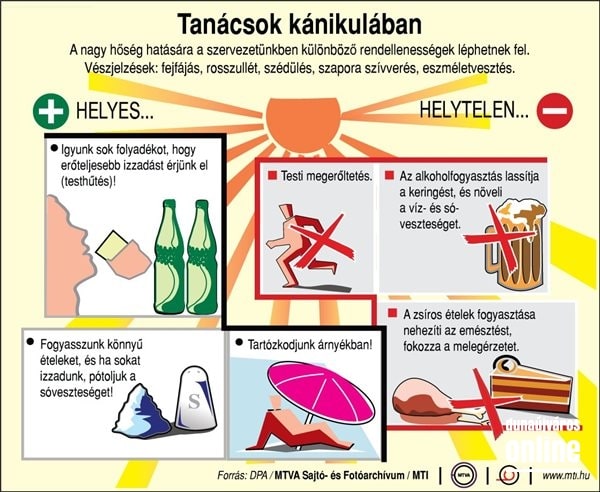
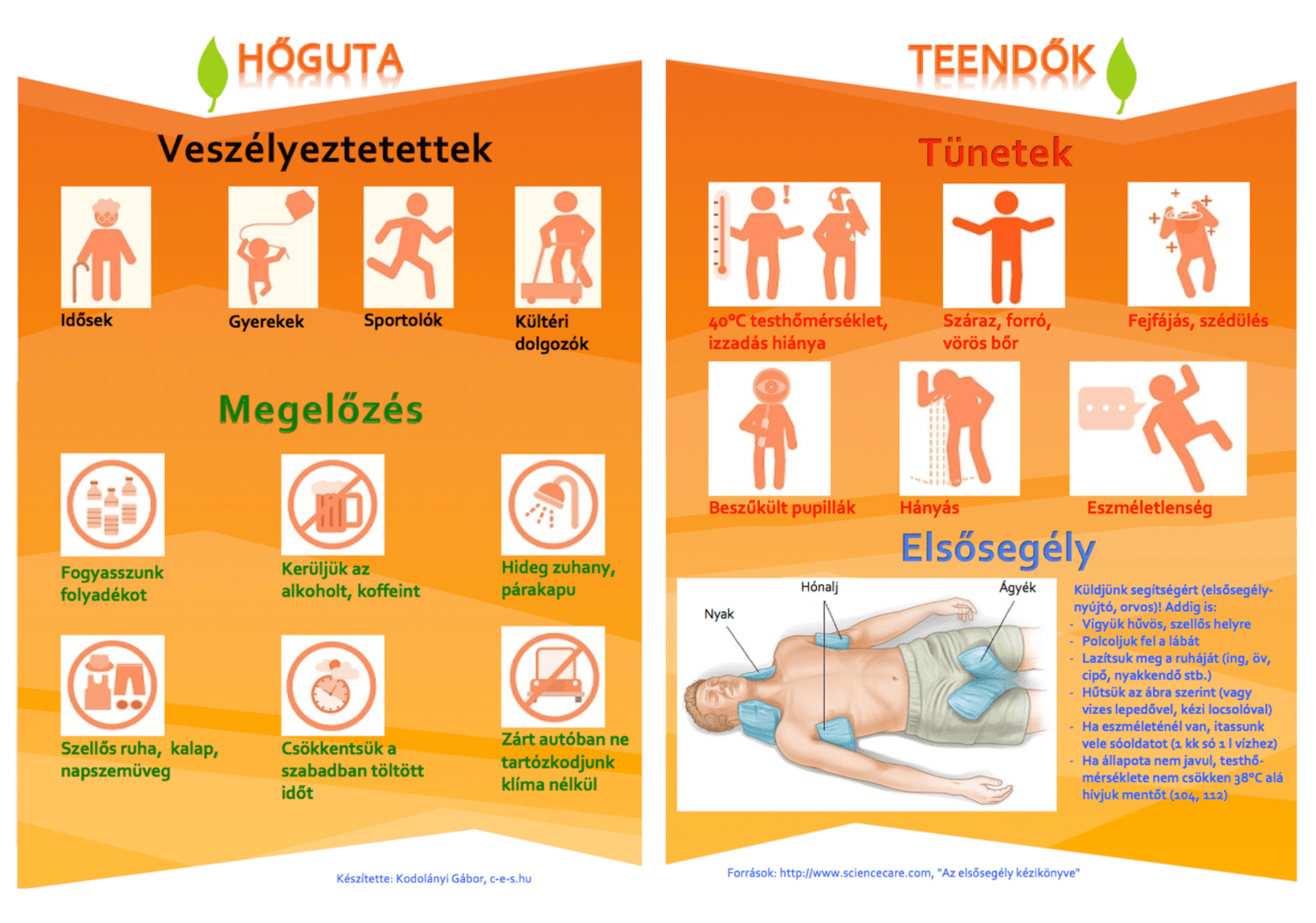
- When you set off, plan the hard part of the hike for the early hours of the morning or late afternoon!
- Although it’s cooler in the forest, the humidity is also higher, so make sure you keep hydrated and replenish salt. Salt tablets can literally be a lifesaver!
- For more vigorous physical activity, 4 litres of water a day may be needed to prevent dehydration. If you run out of water, find a source on the map to fill your canteen! There are also hiking trails with omega signs! The area is rich in springs, so you should have an easier time.
- What not to drink: coffee, as it is diuretic, alcohol, sugary drinks, as they drain water from the body.
- If you can, drink at room temperature, as both hot and cold can take a toll on your body.
- Wear a light-coloured, well-ventilated T-shirt, hat and sunglasses, and make sure you protect exposed skin from the sun.
- The sun protection factor of sunscreens is actually a ratio of how much more time you can spend in the sun without risking sunburn when using a particular product, compared to not using it. The factor number multiplied by the amount of time our skin can spend in the sun without sunburn will be the final amount of time our skin can go without redness when using sunscreen. So for the average adult with a factor 10 sunscreen, the formula would look like this. The final result of the formula is that an average adult with a factor 10 sunscreen can spend 200 minutes in the sun without sunburn. However, this time cannot be extended, meaning that you will not be safe for another 200 minutes by reapplying. In fact, you can only get to 200 minutes if you use the product more than once, as your clothes and sweat can wipe the sunscreen off, just as they can wash off on the beach, waterfront or while swimming. Other factors In any case, the golden rule is to stay out of the sun between 11am and 4pm because of harmful UV rays.
- Older people are particularly prone to dehydration, and if someone doesn’t drink enough, their fluid balance can easily be upset. Their blood thickens and thrombosis can easily develop in already narrow, calcified blood vessels. In older age, you need to drink even if you are not thirsty, and heatstroke can be prevented by increasing fluid intake and staying in shade.
- A particularly dangerous for children dehydration due to the heat, as they lose more fluid than adults relative to their body weight. Parents should always have water with them and keep children hydrated. Babies who are exclusively breastfed until six months of age (and who can suckle sufficiently) do not need to be watered: breast milk provides all the nutrition and fluids they need.
- Hydration is also very important for our pets, as a hike in hot weather can be stressful for them too. Take their water needs into account when you set off! If you are leaving them at the accommodation, always let the reception know and leave them an adequate amount of water!
- In hot weather, it’s even more important not to set off alone, and it’s easier to call for help if you have the Lifesaver app installed on your phone, for example.
Why is it dangerous?
Prolonged heat(hot weather) can cause dehydration, sunstroke, fainting (heat stroke) and electrolyte imbalance. To prevent dehydration, it is particularly important to ensure adequate fluid intake during heat alerts, as dehydration due to insufficient water intake can lead to dangerous blood pressure drops.
Sudden low blood pressure can cause a serious, shocking, life-threatening condition. Staying in an excessively hot and humid environment for prolonged periods of time can even lead to heat stroke, the most serious and life-threatening form of heat stroke.
During the summer months, special care should be taken to protect the skin, as skin tumours can develop as a long-term complication of sunburn (see also Sunburn and sun protection). It is important to know that UV radiation can cause long-term damage to the structure of the skin and increase the risk of melanoma.
Avoiding direct sunlight, wearing protective clothing and using sunscreens can also reduce the risk of developing sun allergy. Before going outdoors or swimming in the open water, it is a good idea to check the forecast of UV radiation levels with HungaroMet.